
NXP GTL2107PW: A Comprehensive Technical Overview of this 28-Bit 3V to 5V GTL/TTL Bi-Directional Universal Bus Transceiver
In the realm of high-performance digital systems, efficient and reliable voltage level translation is a critical function, especially in mixed-voltage environments. The NXP GTL2107PW stands out as a sophisticated solution designed to address this challenge. This integrated circuit is a 28-bit bi-directional universal bus transceiver that provides seamless translation between Gunning Transceiver Logic (GTL) and TTL/CMOS logic levels, specifically bridging the gap between 3V and 5V systems.
The primary role of the GTL2107 is to facilitate communication between processors or controllers operating at lower core voltages (e.g., 3.3V) and legacy subsystems or memory that require 5V TTL signaling. Its bi-directional capability is a key feature, allowing each of its 28 channels to independently transmit data in either direction. The direction of each channel is controlled by a dedicated direction control pin (DIR), offering designers precise management of data flow. This eliminates the need for multiple discrete components, simplifying board design and saving valuable space.
A significant technical advantage of this transceiver is its implementation of GTL technology. GTL is a signaling standard known for its high-speed, low-power, and low-noise characteristics, making it particularly suitable for backplane and bus applications. The GTL2107's inputs on the GTL port (B-port) are designed with a low-voltage threshold, typically around 0.8V, which is optimal for the reduced swing of GTL signals. On the other side, the A-port features standard TTL/CMOS inputs and outputs, compatible with 5V logic levels.
The device operates from a single 3.3V power supply (VCC), yet it seamlessly translates signals to 5V TTL levels on its A-port. This is achieved through its internal circuitry, which is engineered to handle the voltage difference without requiring an external 5V supply. Furthermore, the GTL2107PW incorporates active bus hold circuitry on its TTL/CMOS (A-port) inputs. This is a crucial feature that holds the input signal at a valid logic level when the bus is tri-stated, preventing it from floating and thus reducing system noise and minimizing current draw.
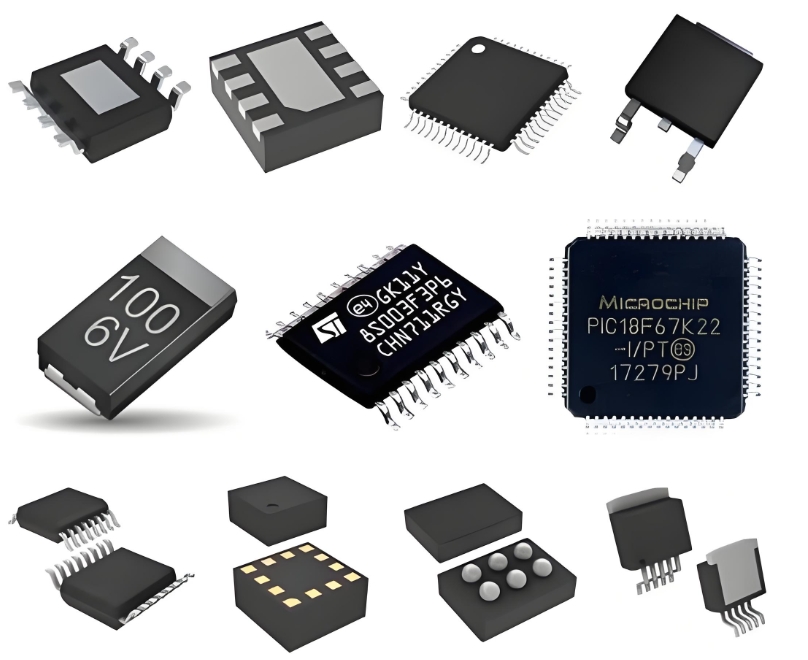
Housed in a TSSOP56 package, the device is designed for space-constrained applications. Its robust ESD protection ensures high reliability in demanding environments. Typical applications span across telecommunications infrastructure, networking equipment, industrial automation, and high-end computing systems where mixed-voltage data buses are prevalent.
ICGOOODFIND: The NXP GTL2107PW is an exceptionally versatile and high-performance solution for mixed-voltage system design. Its high bit-width, bi-directional nature, and integrated GTL-to-TTL translation capabilities make it an indispensable component for engineers developing complex digital systems that require reliable and efficient communication between 3V and 5V logic domains.
Keywords: Bi-Directional Transceiver, Voltage Level Translation, GTL Logic, Mixed-Voltage Systems, Bus Hold

