
Intel N80C286-12: The 12 MHz Microprocessor That Powered a Computing Revolution
The evolution of computing is marked by pivotal moments where technological leaps redefine what machines can achieve. Among these milestones stands the Intel N80C286-12, a microprocessor that not only elevated performance but also laid the groundwork for modern computing architectures. As a higher-speed, lower-power version of the legendary 80286, this 12 MHz variant was instrumental in transitioning personal and business computing into a new era of capability and efficiency.
Unveiled as an enhanced iteration of the original 80286, the N80C286-12 retained the groundbreaking features of its predecessor while operating at a swifter 12 MHz clock speed. This increase in frequency translated directly into superior processing power, enabling more complex applications to run smoothly and multitasking to become a practical reality for the first time in mainstream computing. The chip’s 16-bit architecture and support for protected mode memory management were revolutionary, allowing access to up to 16 MB of RAM—a staggering improvement over the 1 MB limit of earlier processors. This capability was critical for supporting advanced operating systems like early versions of Microsoft Windows and OS/2, which demanded more memory and stability.
The "C" in N80C286 signified its CMOS construction, which offered reduced power consumption and heat generation compared to NMOS-based designs. This made the processor particularly suited for portable and compact systems where energy efficiency was becoming a priority. The integration of CMOS technology ensured that the chip could deliver high performance without compromising reliability, making it a preferred choice for mission-critical business environments.
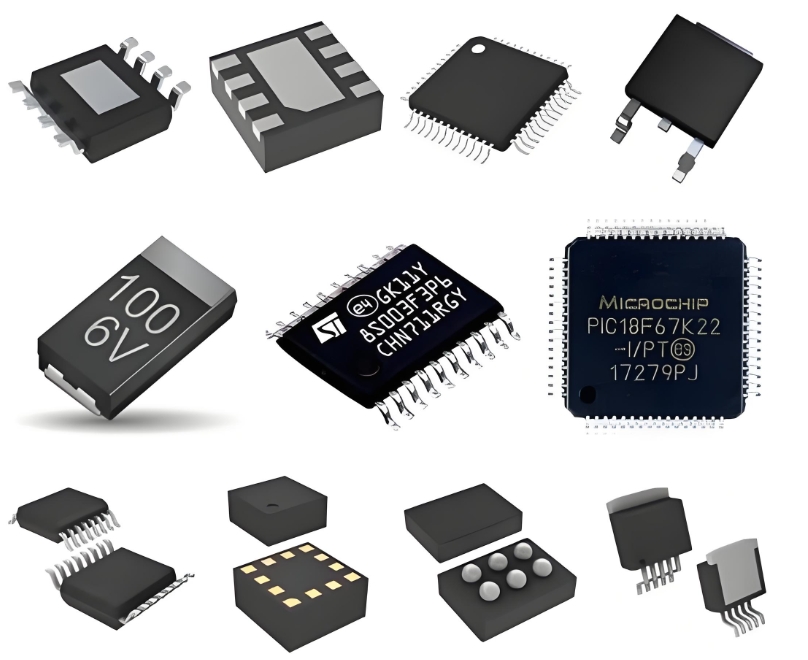
In practice, the Intel N80C286-12 became the heart of IBM PC/AT compatibles and high-end workstations, driving software innovation and enabling more sophisticated computing tasks. It supported virtual memory management, a feature that allowed systems to use disk space as an extension of RAM, thereby running larger applications efficiently. This was a cornerstone for the development of modern multitasking operating systems.
The legacy of the N80C286-12 is profound. It bridged the gap between the rudimentary computing of the early 1980s and the powerful, user-friendly systems of the 1990s. By balancing speed, efficiency, and advanced features, it empowered a generation of computers that transformed how businesses operated and how individuals interacted with technology.
ICGOO
The Intel N80C286-12 microprocessor exemplifies a critical juncture in computing history, combining higher clock speed, energy-efficient CMOS technology, and advanced memory management to enable the widespread adoption of powerful, multitasking-capable systems. Its architecture laid the foundation for future innovations, cementing Intel’s role as a driver of technological progress.
Keywords:
Intel 80286, 16-bit Architecture, Protected Mode, CMOS Technology, Virtual Memory Management

